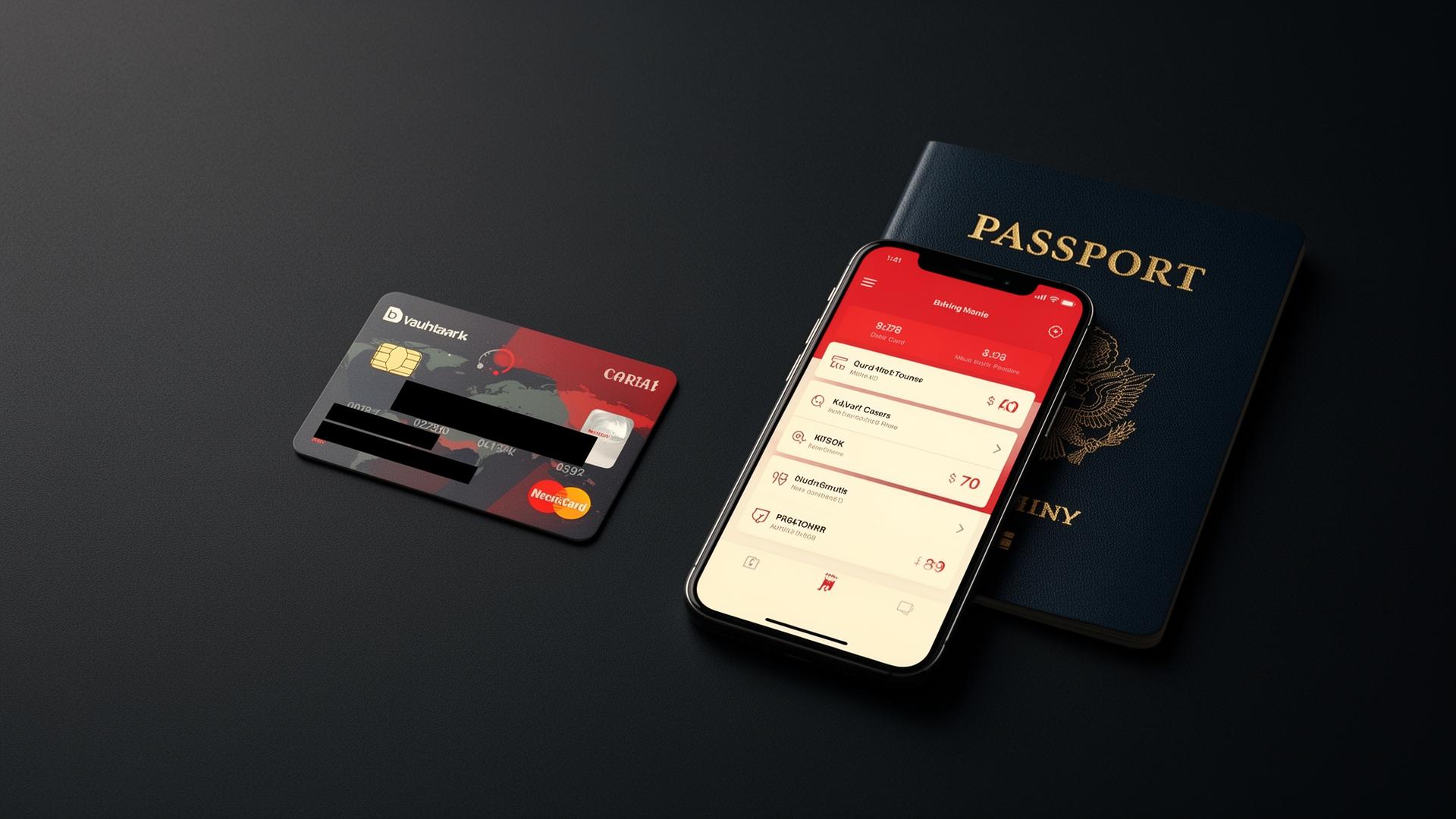
Offshore banking has a reputation problem. Say the words and most people picture a numbered Swiss account, a briefcase of cash, and something faintly illegal. That picture is about thirty years out of date.
An offshore account is just a bank account in a country that isn't your home one. That's the whole definition. It's completely legal, millions of ordinary people hold one, and the reasons to have one are boring and sensible: holding more than one currency, spreading your money across more than one banking system, keeping funds outside a country whose politics or banks you don't trust, and being able to get paid by clients anywhere. None of that requires secrecy, and in 2026 secrecy isn't on the menu anyway.
So here is the honest, complete picture. What offshore banking actually does, the part that's legal and the part that isn't, and every type of jurisdiction worth banking in, sorted by the one thing that decides whether they'll even take you: how much money you bring.
The honest part: legal, reported, and not secret
Two facts up front, because almost everything else depends on them.
Having an offshore account is legal. Hiding it is not. In nearly every country, you are free to bank abroad. What you are not free to do is fail to tell your tax authority about it. That's the line. Stay on the right side of it and offshore banking is a normal, defensible thing to do. Cross it and you've committed a crime, regardless of where the account sits.
Banking secrecy is dead. This is the part the briefcase-and-Switzerland crowd hasn't caught up on. Over 100 countries now exchange account information automatically under the Common Reporting Standard, known as CRS. That means the country where you bank quietly reports your account back to the country where you're tax resident, every year, without anyone asking. The United States runs its own version called FATCA, which does much the same thing for US citizens worldwide. The upshot is simple: assume your home tax authority will know about any account you open. Plan as if there are no secrets, because there aren't.
Once you accept that, offshore banking stops being about hiding and starts being about what it's actually good for: currency diversification, political and banking-system risk, asset protection through stronger legal systems, and access to services your home country may not offer. Those are the real reasons, and they don't require breaking any rules.
Why most applications get rejected
Before the list, the single most useful thing to understand. The biggest obstacle to opening an offshore account is not paperwork or your passport. It's applying to a bank that was never going to accept your profile in the first place.
Banks quietly sort applicants by risk and capital. A bank built for two-million-dollar private clients will reject a freelancer with twenty thousand, not because anything's wrong with the freelancer, but because they don't fit the book. Most rejected applications fail for exactly this reason: a mismatch between the client and the bank. Pick the jurisdiction that matches your money and your situation, and the process gets dramatically easier. That's why the list below is sorted by capital, not by region.
The tiers, by how much you need
Offshore banking splits cleanly into levels based on the minimum deposit. Find the tier your capital lands in, then look at the options inside it. Trying to bank above your tier is how people waste months and frozen deposits.
Before the tiers: the fintech option
If you mainly need to hold and move money in multiple currencies, you may not need a traditional offshore bank at all. Fintech and e-money platforms have largely replaced them for everyday use.
| Provider | Minimum | Remote | Notes |
|---|
| Wise | $0 | Fully online | Local account details in 20+ currencies. Best for receiving and moving money globally. |
| Revolut | $0 | Fully online | Multi-currency, cards, decent app. Coverage varies by country. |
| Airwallex | $0 | Fully online | Strong for businesses and cross-border payments. |
| Payoneer / Grey | $0 | Fully online | Useful for freelancers getting paid internationally. |
One catch worth knowing: most of these are e-money institutions, not full banks. Your money isn't always protected by a deposit-guarantee scheme the way a real bank account is, and they can freeze accounts with little warning. Excellent for transacting and getting paid. Not where you park serious savings or build real asset protection.
Tier 1: Accessible (low or no minimum, often remote)
The realistic entry point for most people. Low minimums, and several will open your account without you setting foot in the country.
| Jurisdiction | Typical minimum | Remote opening | Notes |
|---|
| Georgia | $0 to ~$1,500 | Often yes | TBC Bank and Bank of Georgia. Fast, sometimes same-day. TBC explicitly accepts US persons. A nomad favourite. |
| Belize | $500 to ~$5,000 | Yes | Caye International Bank and Heritage Bank. Remote opening, accepts US persons, strong USD interest rates. |
| Nevis | A few thousand | Yes | Bank of Nevis offers fully remote opening. Long-standing asset-protection jurisdiction. |
| Seychelles | Low to mid | Yes, via providers | Nouvobanq and MCB. Multi-currency, geared to international companies. Limited deposit protection. |
| Portugal | From ~$500 | Sometimes | Mainstream EU banking, often opened alongside residency. Reputable and low-cost. |
| Cyprus | ~$1,500 to $50,000 | Sometimes | EU jurisdiction, wide range depending on the bank and profile. |
Tier 2: Mid-tier ($50,000 to $250,000)
More established jurisdictions and stronger correspondent banking, in exchange for real money on deposit. This is where reliable international wire transfers and serious multi-currency setups live.
| Jurisdiction | Typical minimum | Remote opening | Notes |
|---|
| Channel Islands (Jersey / Guernsey) | $50,000 to $100,000 | Yes (e.g. HSBC Expat) | HSBC Expat is held in Jersey, opens remotely, and lets you reside almost anywhere. Excellent correspondent banking, so wires rarely get flagged. |
| Isle of Man | $50,000+ | Sometimes | Highly regulated alternative to the Caribbean centres. |
| United Arab Emirates (DIFC / ADGM) | Varies, mid-range | Often, via free-zone company | Dubai has aggressively modernised. Remote onboarding is often tied to setting up a free-zone company. Multi-currency, strong correspondent network. |
| Hong Kong | Up to ~$100,000 | Hard without local presence | A top financial hub, but traditional banks are tough for non-residents without a local tie. Fintech is the easier route in. |
| Singapore | SGD 200,000 to 500,000 | Via platforms or agents | World-class banking. Traditional accounts need real money. Fintech alternatives start near zero. |
| Mauritius | ~$250,000 | Via providers | Multi-currency, geared to international clients and companies. |
| Panama | Mid-range, heavy documents | Mostly no | Removed from the FATF grey list, and now demands extensive documents (years of tax returns, reference letters). Top banks no longer open remotely for non-residents. Harder than its old reputation. |
Tier 3: Private banking ($500,000 and up)
The genuine high end. Prestige, stability, sophisticated services, and capital requirements to match. This is where the old "Swiss account" image actually lives, minus the secrecy.
| Jurisdiction | Typical minimum | Remote opening | Notes |
|---|
| Switzerland | $500,000 to $3,000,000 | Hands-on, usually in person | The benchmark for stability. FINMA-regulated crypto banks like Sygnum and SEBA exist for digital assets. Expect thorough checks. |
| Singapore (private) | $500,000+ | Hands-on | DBS, OCBC, UOB. Pairs traditional private banking with crypto custody for larger portfolios. |
| Monaco | $500,000+ | In person | Private banking tied to the principality's wealth ecosystem. |
| Luxembourg | Up to $3,000,000 | Hands-on | EU private-banking heavyweight. |
| Liechtenstein | High | Hands-on | Small, stable, focused on private wealth and asset protection. |
Remote or in person?
A quick reality check, because flights and hotels add up. Fully remote opening is realistic in Belize, Georgia, Seychelles, Nevis, the UAE (usually alongside a company), and through HSBC Expat in Jersey. Expect hands-on checks, a video call, or an in-person visit in Switzerland, traditional Hong Kong, much of Singapore's private banking, and Panama. When in doubt, assume the more prestigious and higher-capital the bank, the more it wants to see you.
A note for Americans
If you hold a US passport, two things are true. First, you can legally open offshore accounts, and plenty of banks accept you, but many quietly refuse US persons because FATCA makes you expensive to bank. The ones that openly welcome Americans include Caye International in Belize, TBC in Georgia, and HSBC Expat. Second, your reporting load is heavier. You must file an FBAR each year if your foreign accounts add up to more than $10,000 at any point, plus FATCA forms during onboarding. None of this is hard. It's just non-negotiable.
How to actually open one
The sequence that works, in order.
Match the jurisdiction to your capital and your profile first, using the tiers above. This one step prevents most rejections. Then get your documents in order: a valid passport, proof of address, and, the part people underestimate, proof of where your money came from. Banks care intensely about source of funds now, so be ready with pay slips, sale documents, or business records. Choose remote or in-person based on the tier. Fund the account with the minimum from an account in your own name, since a mismatched sender name triggers delays. Most accounts open in two to four weeks once your documents are clean.
Then handle the reporting, every year, without fail. Declare the account to your home tax authority. File your FBAR if you're American. Treat the CRS exchange as a given. The entire strategy only works if it's done in the open, and the good news is that doing it properly costs you nothing but a form.
This is general information, not personal financial or legal advice, and the figures above move constantly, so confirm current requirements with any bank before you commit.
The bottom line
Offshore banking isn't a loophole and it isn't a secret. It's a normal tool for not keeping everything you own inside one country's banks and one country's currency. Done in the open and matched to the right tier, it's one of the most practical moves in this entire field.
Pick the tier that fits your money. Open the account. Report it. Sleep fine.


 By Erika Botnæs